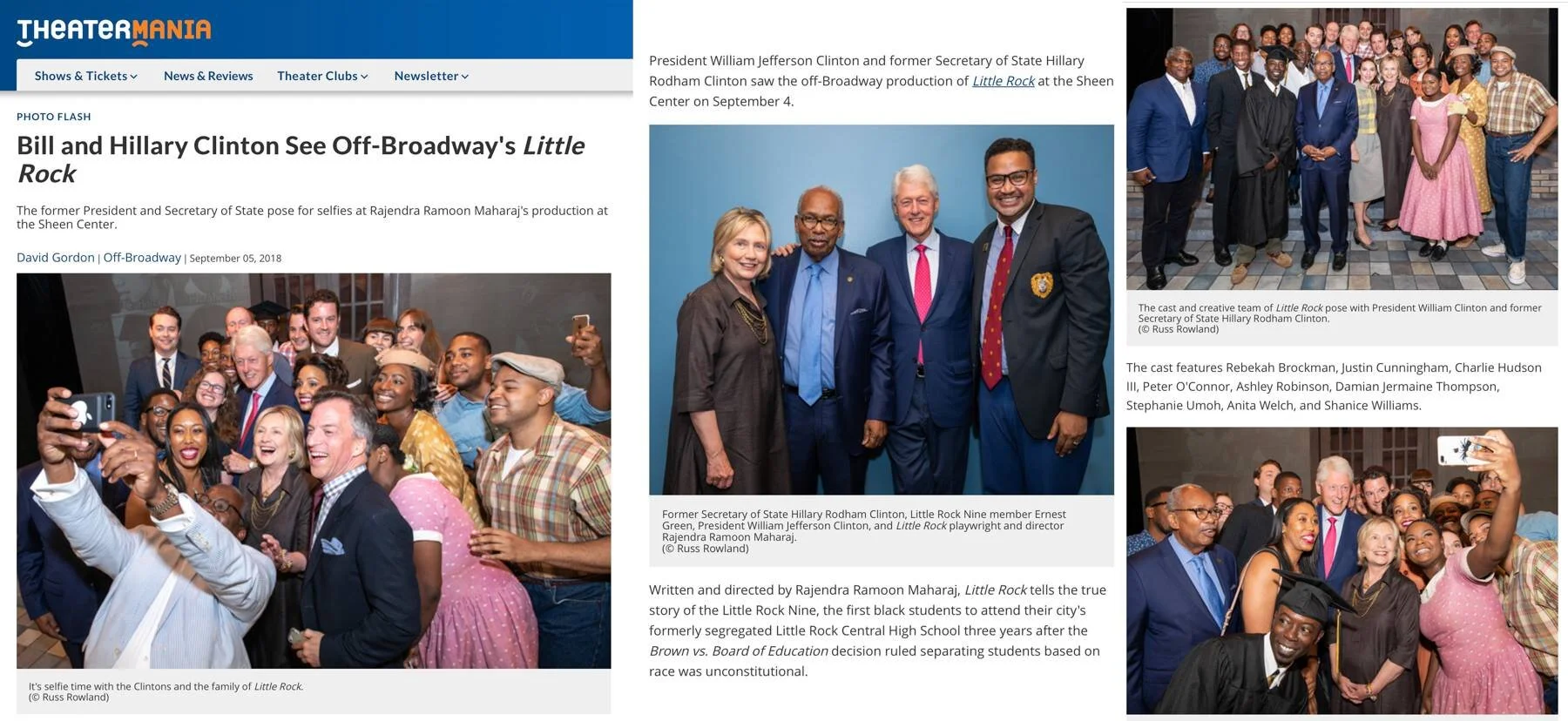
. In Who Gets to Be Egyptian? (January 29-30), poet, actor, class mixologist, dancer, salesman, activist, artist, pianist, and teacher Michael Gene Jacobs, aka MikeDriven, directs himself, Anna Wulfekuhle, using ancient stories.
Touch Review. Blessed Unrest’s yearning and reopening in person, on the street.-New York Theater
Michael Gene Jacobs slept in the same bed as his mother throughout his childhood, but they never touched. Now, he tells us speaking as his mother, he realizes why:
“’I can’t afford to coddle my only male child, to soften his senses and make him unprepared to process all the sensory data… “ that will assault him as a Black man.
It is the most touching moment in “Touch,” a 45-minute dance theater piece by the 20-year-old theater company Blessed Unrest, which I saw over the weekend on roped-off East 26th Street, just north of Madison Square Park. It is part of the NYC Open Culture Program, in which almost 200 street locations throughout the five boroughs are available for closed off for ticketed performances.
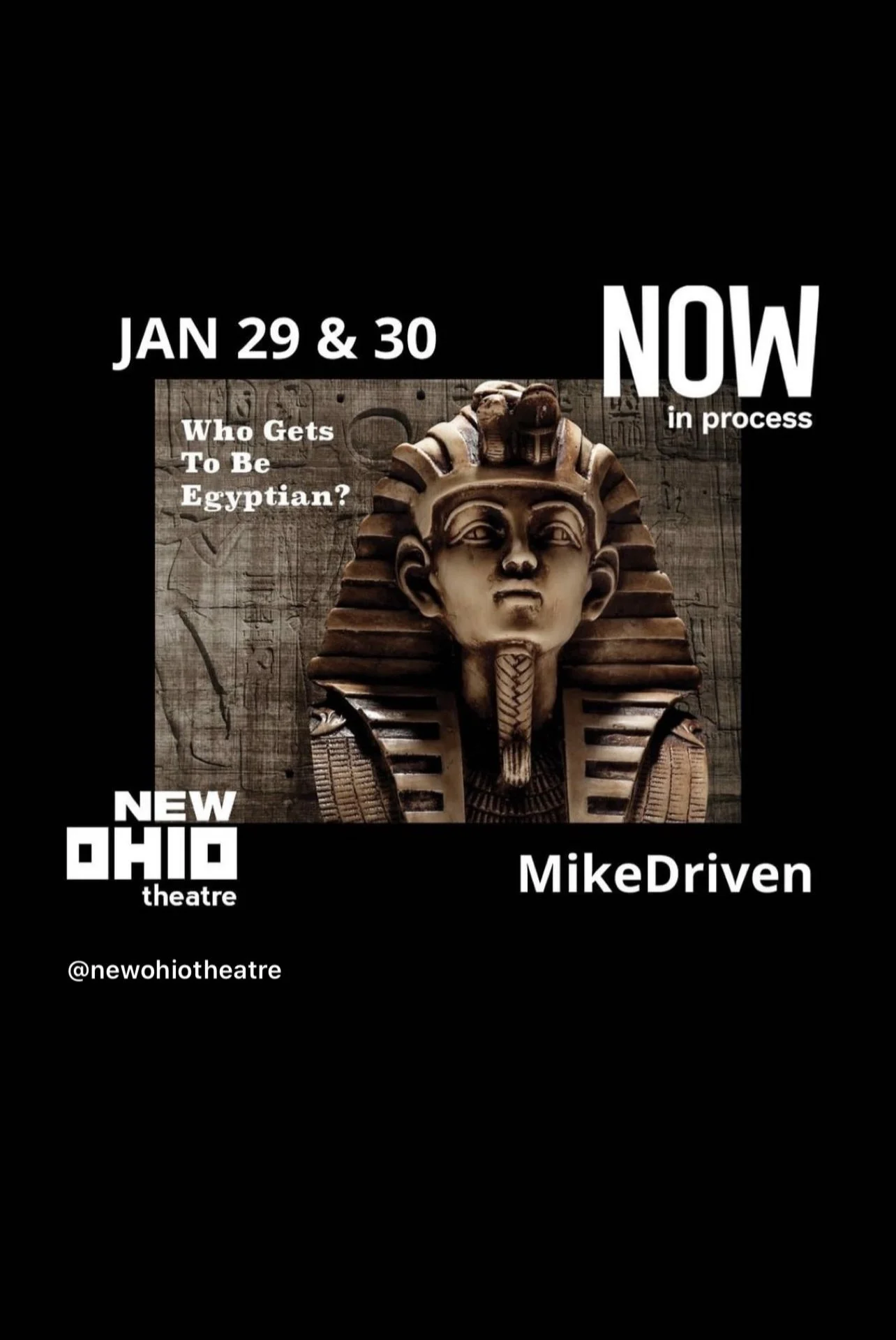
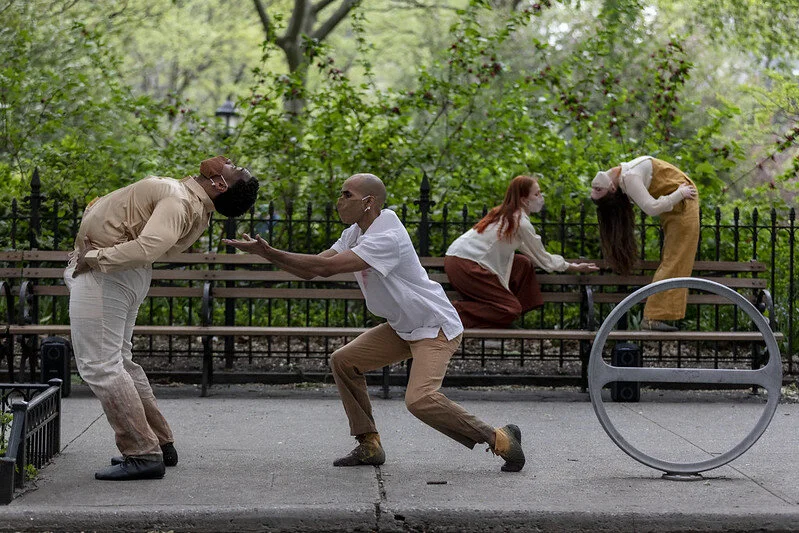
Billed as a meditation on the longing to connect, the street theater piece felt like a special kind of reopening for me – a reopening of the senses – as I sat on the smooth tar in the middle of the street underneath a warming sun, and watched the four agile performers enact an entire vocabulary of dance poses on the sidewalk in front of a restful green backdrop of the trees in the park.
But if the four moved physically close to one another – often touching — the stories they told were, let’s say, socially distanced. All four kept their masks on as they moved, and we heard their separate stories from portable speakers broadcasting a soundtrack of their voices mixed with music.
Anna Wulfekuhle’s voice told the story of her visit to a stable, paying the stable hand to take a hike so she can be alone with the horses.
Ariel Polanco’s told how he could hear a neighbor through the wall as she used the sink, or coughed, or screamed, or especially, when she laughed – she laughed a lot.
Tatyana Kot’s talked about her laugh, and how she developed it after being bullied by gangs of boys all throughout elementary school.
These stories were told alternately; not all led anywhere; not all the words were part of these stories; there was some spoken-word poetry. Again Michael Gene Jacobs:
Confusion
Shaking from fear
The roaring 20’s after the quarantine
Watching black people being slaughtered
Heart racing fast
Being arrested for protesting
Heart racing fast
Everything the cast members said, Blessed Unrest tells us, was based on their personal experiences, but “adapted and edited” by the writers Keith Hamilton Cobb and Teddy Jefferson.
I have no doubt that the physical movement was carefully coordinated with the stories, but this was not something I could detect by myself – a failure that I’m used to, and that in some ways I found comforting. If “Touch” suggests the sort of avant-garde experiments that exist at best in the periphery of my comprehension, that’s a bafflement that’s so familiar from a youth spent Off-Off Broadway, that it feels like returning home.
Touch will be presented again north of Madison Square Park next weekend. Saturday, May 8, 7:00 pm. Sunday, May 9, 3:00 pm & 5:00 pm
Touch– Madison Square Park, New York, NY
Writers: Keith Hamilton Cobb and Teddy Jefferson
Director: Jessica Burr
Reviewer: Carrie Lee O’Dell
In the past fourteen months, we have seen theatre artists engage a variety of innovative ways to tell stories remotely; we have seen recorded shows, live interactive plays, sound walks, and even phone plays. As the numbers of vaccinated folks in New York continues to rise, so does the promise of more live, in-person performances. New York City’s Open Culture program, which launched in March, allows for ticketed, socially distanced performances. Theatre company Blessed Unrest’s latest offering, Touch, is presented on the north border of Madison Square Park as part of the Open Culture program. Touch is a movement piece with text by the cast finalized by Keith Hamilton Cobb and Teddy Jefferson, Jessica Burr directs.
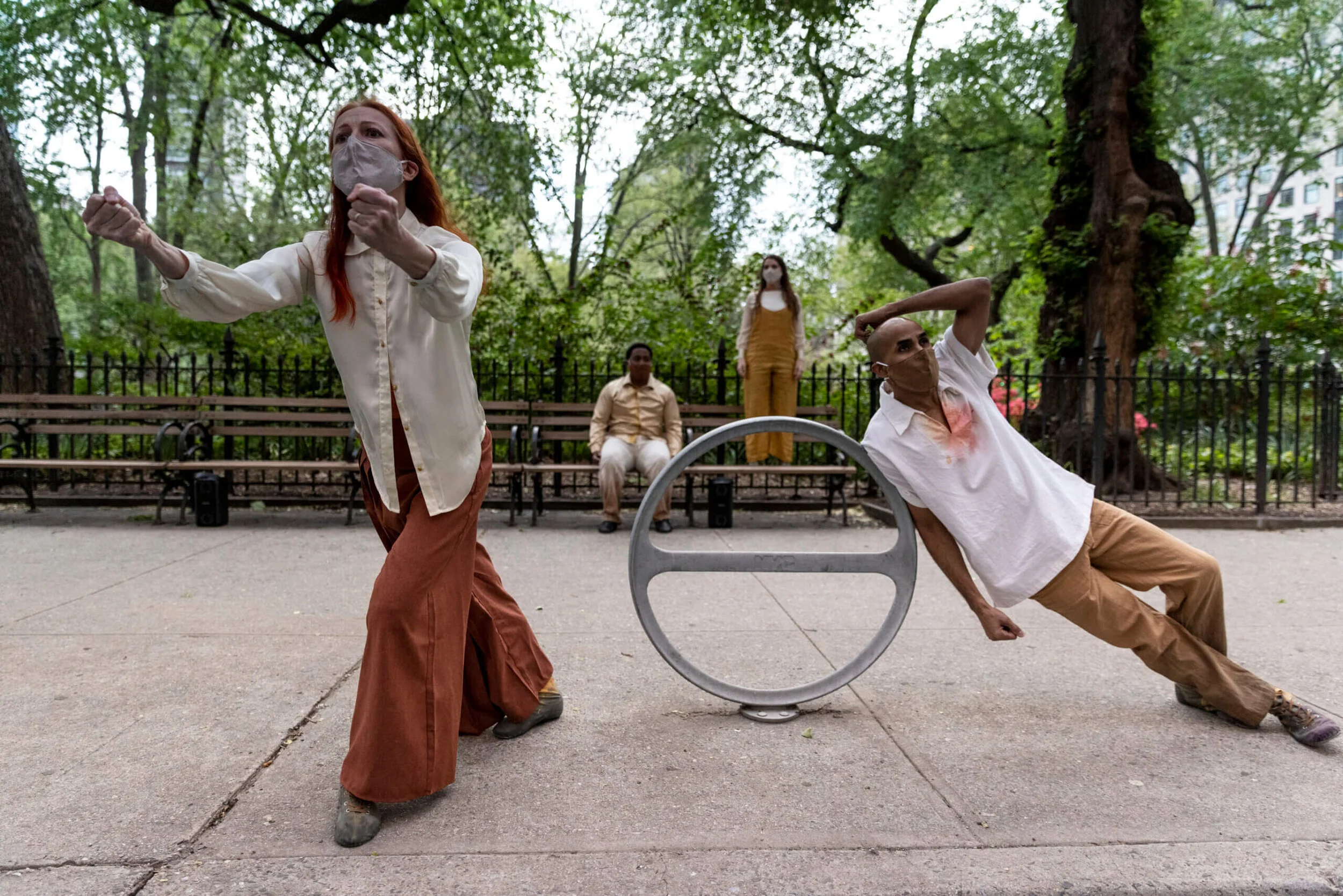
It’s difficult to provide a clear summary of Touch, as it is not driven by narrative as much as by engagement with the senses. The “set” consists of a stretch of sidewalk on 26th Street between 5th and Madison Avenues blocked off with traffic cones. The audience watches from 26thStreet, which has been blocked to cars but not to bicycles. The actors (Michael Gene Jacobs, Tatyana Kot, Ariel Polanco, and Anna Wulfekule), who perform masked, use the existing structures on the sidewalk while music and recorded text plays from portable speakers that they move and carry, and cradle. They jump on benches, swing on a small tree, and recline on a circular bike rack. They almost, but not quite touch. Their movements are often just slightly out of synch, just enough that it feels like a choreographic choice rather than a mistake. The text focuses on the memory and promise of touch; there’s one story about breaking into a stable to pet the carriage horses, another about being a child and cuddling with a parent. Nothing captures the pandemic’s longing for contact better than when a voice cries from a speaker, “If I were a guitar, you could hold me by the neck and pluck my strings.”
Performances are exceptional; the actors rise to the challenge of communicating love and longing while masked, a challenge with half one’s face covered. Design elements are also excellent. Sohn Plenefisch’s costumes in autumnal tones do a fine job of marking the performers as connected but also separate. Composer and sound designer Adrian Bridges deserves particular praise for his work. The sound for this production has to do a lot of heavy lifting and Bridges had no permanent sound system to work with, only a set of portable speakers. Of course, the show was subject to the challenges of outdoor performances—a passing ambulance, cyclists taking the 26th Street bike lane, and low-flying pigeons run the risk of distracting the audience, but not for long. Audience members should be sure to wear comfortable shoes and folks who cannot stand comfortably for 45 minutes may wish bring a camp chair.
As much as it has been exciting to see theatre artists innovate with remote performances, there is no substitute for being part of a live audience; hearing real applause after a year of clapping emojis on a Zoom chat is intoxicating. Touch is an excellent step back into in-person performance, allowing us to test the masked, socially distanced waters as we prepare to advance into a post-pandemic world. It is a balm to the soul and should not be missed
Runs until 9 May 2021 | Photo Credit: Maria Baranova